Perhaps no other area of life has been affected quite as much by the pandemic, as work.
Amongst the many ways COVID has affected our lives, the way we work has to top the list.
It was one of the first and biggest changes we saw in March 2020; and it still affects us today, long after legal restrictions have been lifted. Before, standard office culture was that of the 9-to-5 commute, Monday to Friday without fail. Asking for a day to work-from-home was not impossible, but it was uncommon, and you might have faced the ridicule of colleagues for doing so.
Fast forward to now, two years after the pandemic first struck - the commute has been all but kicked to the curb, WFH is the new 9-to-5, and flexibility has gone from being a job perk for the few to a flat-out must have for all workers. The working landscape looks unrecognisable from pre-pandemic times.
With that in mind, we caught up with Co-Founder, James Solomides, to chat about the three main ways he has seen life change (arguably for the better) since the pandemic struck.
Work-life balance is everything
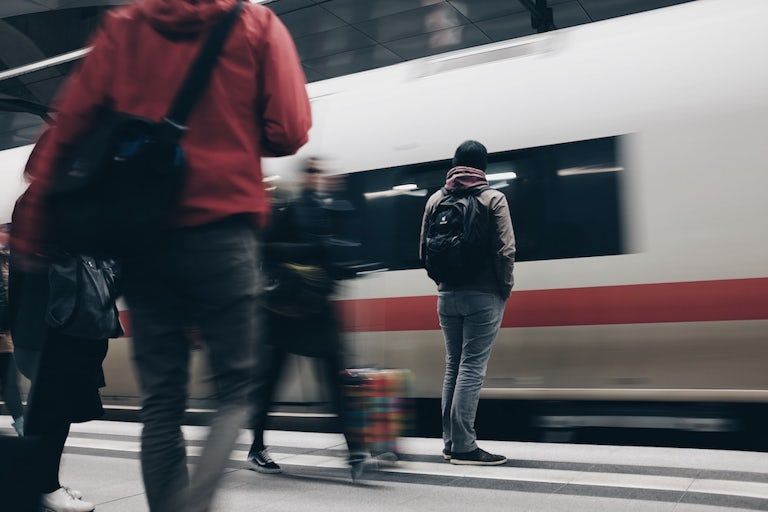
Before the pandemic, you might have laughed at the notion of a work-life balance. When the average employee was spending the majority of their time out of the house (either commuting or at work), you'd be hard-pressed to find someone with an actual balance between work and life.
But now, this has gone from being an out-of-reach fantasy, to a present reality.
"Like many others, I have seen a huge shift in my work-life balance over the last couple of years," said James when we spoke to him. "Living in Kent, my daily commute into a Central London HQ pre-Covid resulted in 3 hours on a train Monday to Friday and cost me the best part of £500 month for the pleasure of doing so..." tyson-hzNavqkrQUA-unsplash.jpg1.64 MB
"Most notably as a father of young children, I would leave my house in the dark when my children were asleep and return when they were tucked in for the night later that evening. I would often not see them awake between a Sunday to the following Friday which seems unthinkable now, but at the time was just ‘the norm’, and something most of us did without question."
But not everyone has found this balance easy to maintain, with work moving further and further into the home. A study by the University of Turku in Finland found that women in particular were struggling with the blurring of boundaries between work and home, taking on more domestic roles than their partners whilst also being expected to work to the same standard.
A recent podcast we hosted also touched on this topic. "As I sit here recording this podcast my dining table is our office; I've replaced the artwork on the wall with a whiteboard, and my laptop sits here open 24/7," said guest, Charlie Rosier, CEO of Babbu and single mother. "There is no break-up in my day or what my daughter sees. Obviously there are positives... but the negatives are that you're not a present parent."
"Even my kids are noticing it. Previously they would say “daddy is going to work”, whereas now they say, “daddy is doing work”. If I do venture out of the house during the week, they know I am going somewhere to do my work, rather than the place itself being called work," said James. "Even they appreciate that my work can be done from (almost) anywhere with an internet connection, and so should employers."
But again, not everyone has benefitted in the same way. A 2021 Savills survey found that younger people on the whole did not have a dedicated office space within their home to work from. 29% of 18-24 year olds reported working from their kitchen/dining room, over a quarter from their bedroom, and nearly a third were in a living space. Perhaps that's why the appetite for a 'third workspace' outside the home is so high?
Hybrid working has become the norm
Before the pandemic, the word 'hybrid' had more to do with cars than work. But in the post-WFH craze, hybrid working has become the norm for many office employees around the world.
According to the 2021 census, the appetite for a hybrid approach was on the rise. 85% of adults who worked-from-home during lockdown admitted wanting to go back to the office (or a third workspace) for a few days per week. Now, projections suggest that over a third of employees will have embraced hybrid working by 2023.
"In 2019, the idea of hybrid working was alien for most companies and their employees," said James. "I was actually fortunate enough to work-from-home one-day a week for a period, although was the recipient of comments along the lines of “part-timer” and “enjoy your day off”. Whilst these were most often in jest, it signifies the way many viewed ‘working’ whilst away from the office." linkedin-sales-solutions-6ie6OjshvWg-unsplash.jpg4.11 MB
He continued: "In 2022, working flexibly is now a key weapon in the ever intensifying ‘war on talent’, whether it be flexible days, hours, or indeed the location itself. The idea of a 4-day week now seems like a genuine possibility for employees across a number of industries and is already a reality for many. We have accepted that we do not need to be in a single location, Mon-Fri, to do our best work. In fact, we now understand that it has the opposite effect, and a varied environment is better for our wellbeing and overall productivity."
Looking to make hybrid a 'thing' at your company? NearU are here to help. Our award-winning app gives you immediate access to a network of on-demand workspaces, so you can simply search, book, and work wherever (and whenever) you need to. Whether you’re looking for a meeting room equidistant between remote colleagues, or a hot desk if working from your kitchen just isn’t cutting it, we've got you covered.
Book a sales demo here to get a tailored view of our product. Or why not skip the wait and simply download our app from the App Store or Google Play to see what all the fuss is about for yourself?